What is Play Therapy?
A child can explore their feelings and thoughts creatively in Play Therapy
Play is a child’s natural form of communication. Play Therapy is a type of psychotherapy for a child with a toolkit of toys, so children express themselves through play instead of relying on words. A child’s voice can be heard through their dynamic actions and movement. It is a safe space for children to lead their play and make decisions developing a sense of their power and control. A child has the choice over what they do within safe boundaries to rehearse new coping strategies. They can take risks, solve problems; develop agency and work through worries in play. A child can explore their feelings and thoughts creatively leading to a process of healing.
For more information about Play Therapy from PTUK
Play Therapist - what do they do?
As a Play Therapist I use the Integrated Model of Holistic Play Therapy allowing the child to lead and direct where needed. I reflect on what a child is feeling so they understand their emotions, develop their emotional vocabulary and become aware of their strengths. I am permissive so a child feels able to be themselves and find their voice. I accept a child as they are creating a warm and friendly relationship. I respect that a child can solve their problems, I do not hurry this process, it is at the child’s pace. Boundaries are only set to anchor the therapy. This way of working is based on Axline’s principles forming the Foundation of Play Therapy.
Play Therapist – how do they work?
Within Play Therapy I tune into the child’s world by creating a trusting relationship, a child has unconscious and conscious processes. I support a child to regulate their emotions and ground themselves. I identify patterns and themes and offer insight into a child’s process. The therapist feels when the child is ready by making connections between play themes for example their use of metaphor and play symbols with their real-life experiences (using the Play Therapy Dimension Model). I create a consistent, trusting non-judgemental relationship where a child feels valued and accepted for who they are.
Play Therapy Toys (toolkit)
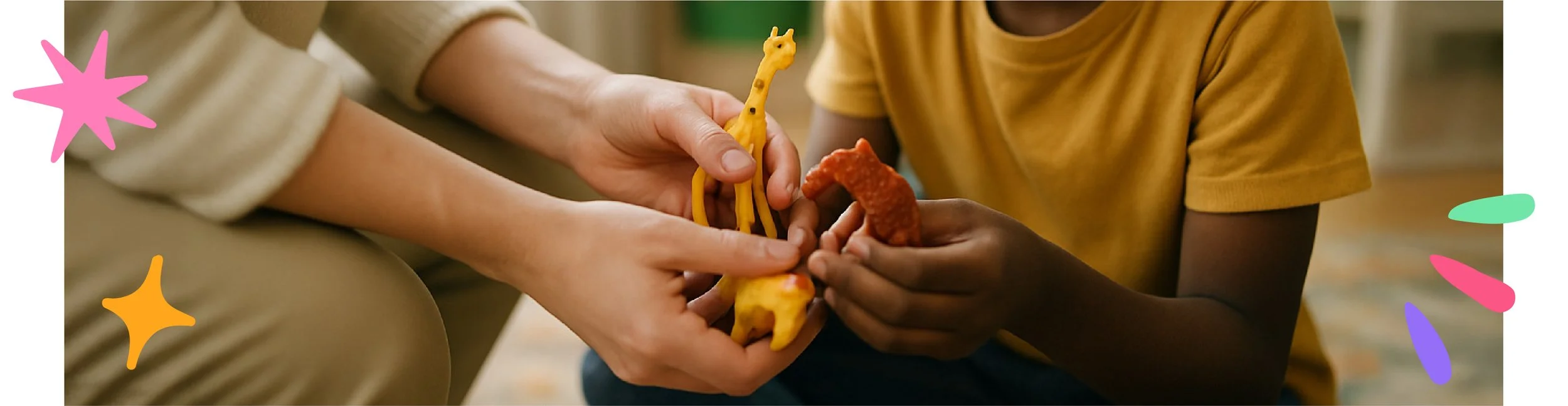
A child can project their inner world using different areas of the Play Therapy toolkit (toys). For example: using clay, masks, dolls house, sand tray, paints and crafts, puppets, Lego (construction), role play, Therapeutic Stories, Creative Visualisation and music. Toys are carefully selected so a child can explore and work through a range of feelings through their choice of play. Toys allow a child to express feelings, real life experiences, test limits, develop positive self-image, understand themselves and develop self-control (Landreth).
Play Therapy helps children manage their?
worries and anxiety
anger, frustration and overwhelming feelings
grief and loss
low confidence and self-esteem
trauma
social and friendship difficulties
big changes, e.g. moving house or school
family challenges like parental separation, sibling or parental illness
Testimonial
“The play therapy group was good; we got to share our worries. I thought I was the only one getting upset, other people get upset too.”
(7-year old girl)